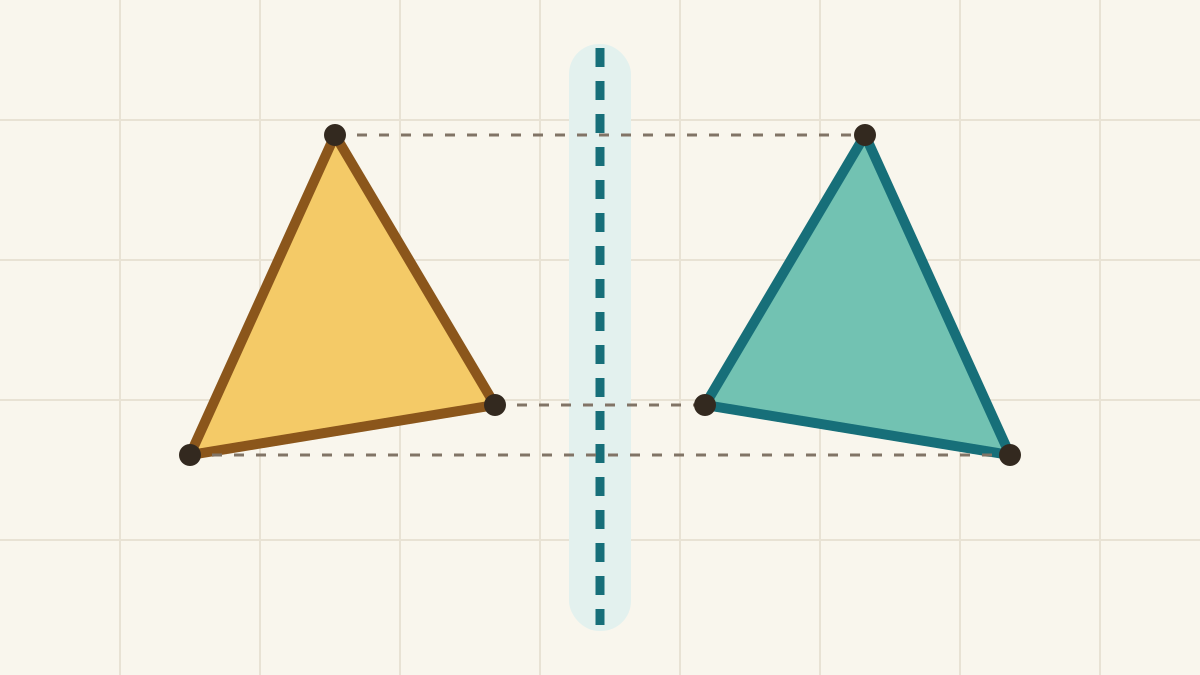
A line reflection flips a shape across a line, as a mirror does. To find the image of a point, go at right angles to the line and place the image the same distance beyond it. A point on the mirror line does not move. The first exercises need only a ruler and square paper; the last two use coordinates as an extra challenge.
The mirror rule
Work with one point at a time: identify the mirror line, reach it at a right angle, measure the distance and repeat it on the other side. Call the image of A “A′”. Join the new corners in the same order only after finding them all. Try the drawing before opening its solution.
1. Segment AB and the sloping line r
Draw the reflection of segment AB in line r. Find A′ and B′ first: simply sliding the segment to the right is not enough.
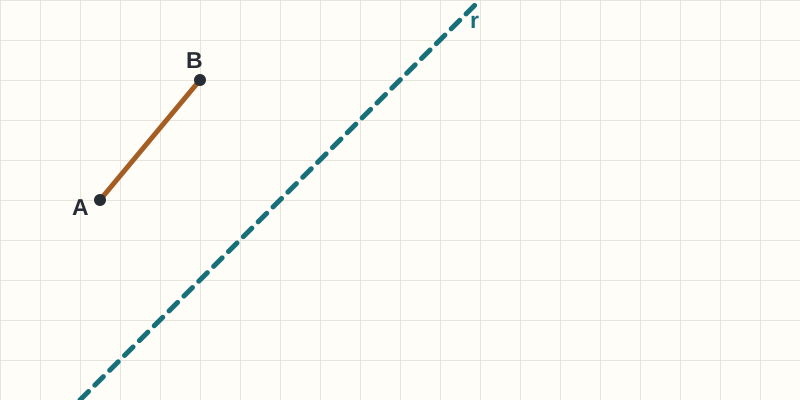
Open the solution drawing
From A and B, draw perpendiculars to r. Continue each beyond r by the same distance to find A′ and B′. Join them to obtain the reflected segment.
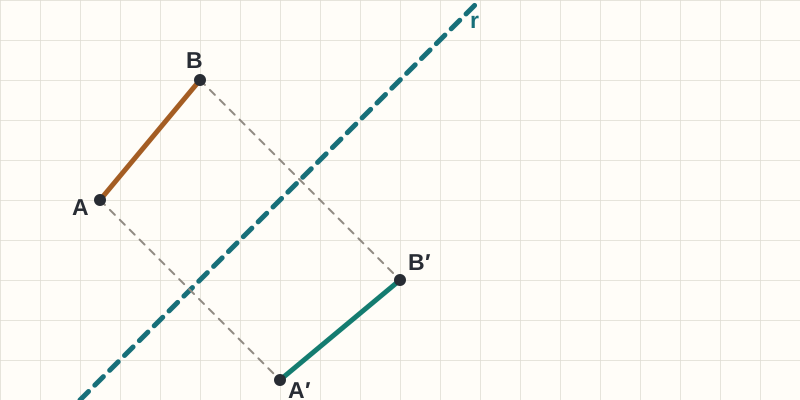
2. The triangle resting on line r
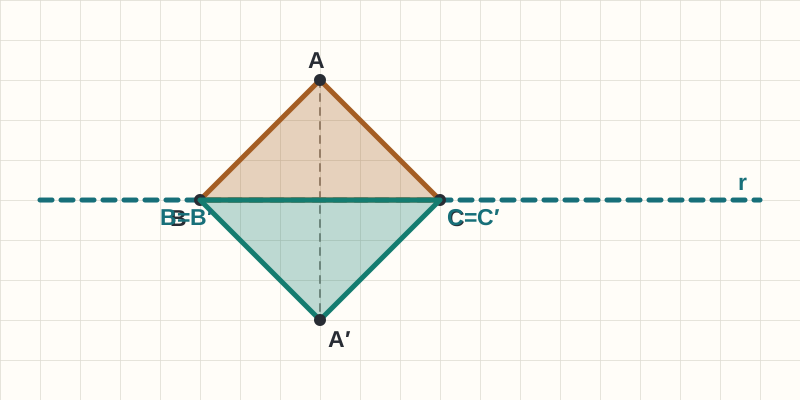
Copy triangle ABC onto square paper and reflect it in horizontal line r. Notice that B and C already lie on the line.
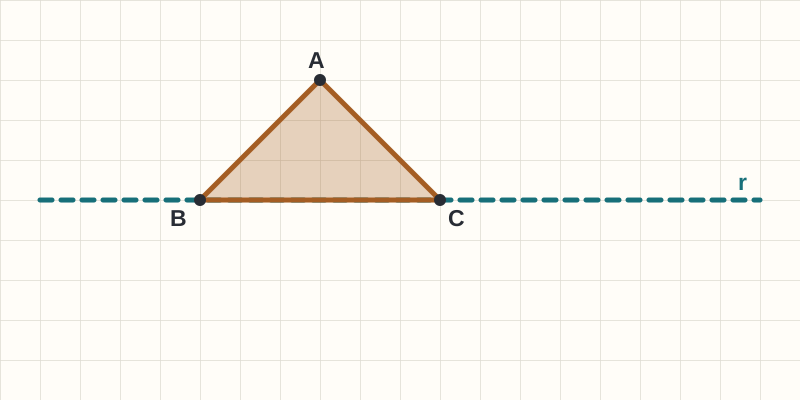
Open the solution drawing
B and C stay put: B′=B and C′=C. A is three squares above r, so place A′ three squares below r in the same column. Join A′ to B and C.
3. Segment CD and the y-axis
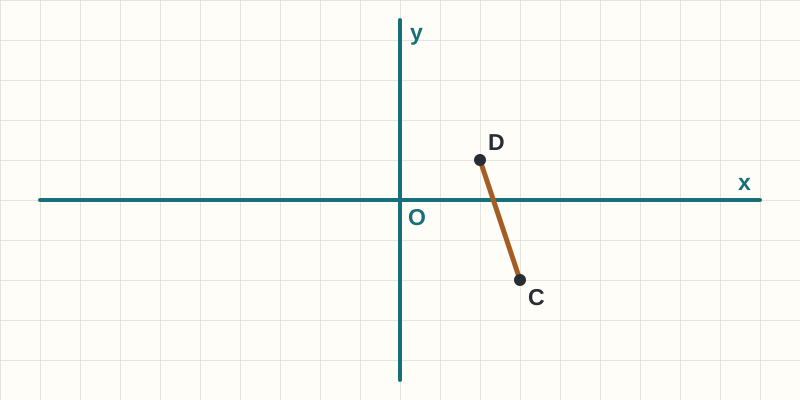
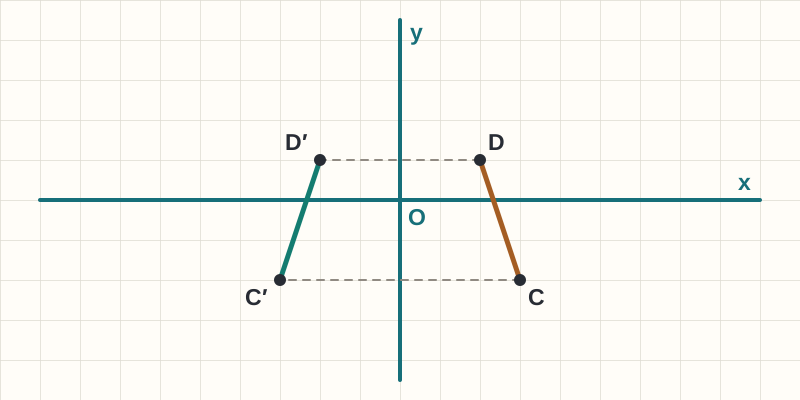
Plot C(3, −2) and D(2, 1), then join them. Reflect segment CD in the y-axis and write the new coordinates.
Open the solution drawing
Reflection in the y-axis changes only the sign of the first coordinate: C′=(−3, −2) and D′=(−2, 1). The second coordinate stays unchanged, so each pair lies on the same row.
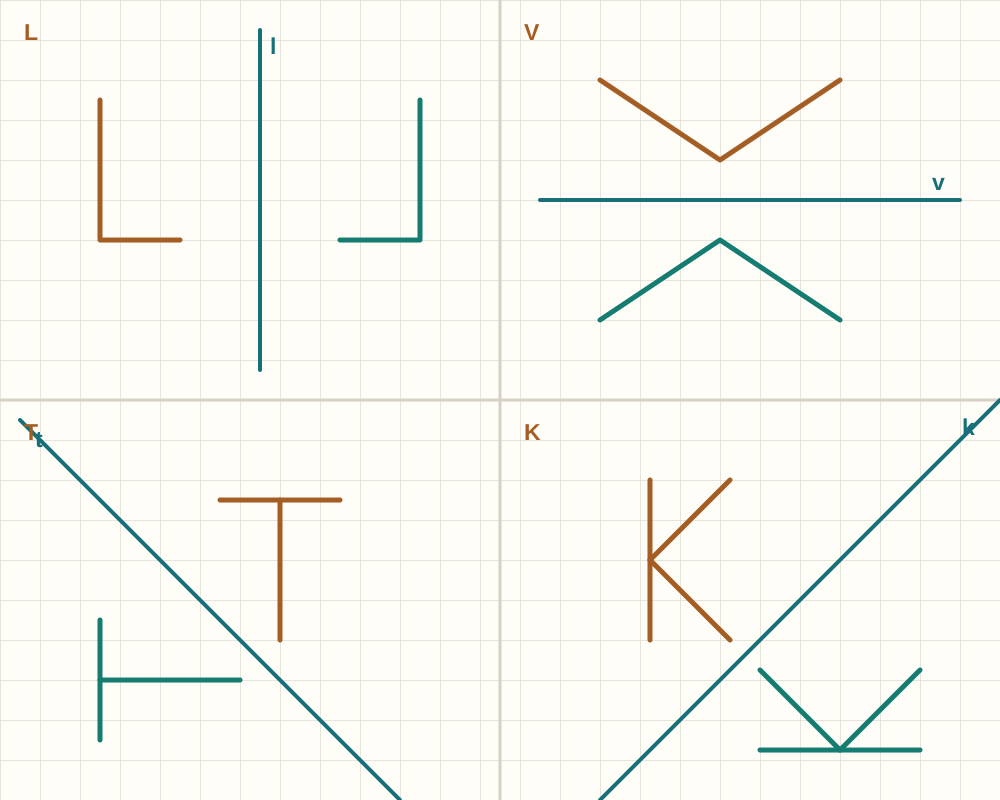
4. Four letters, four lines: L, V, T and K
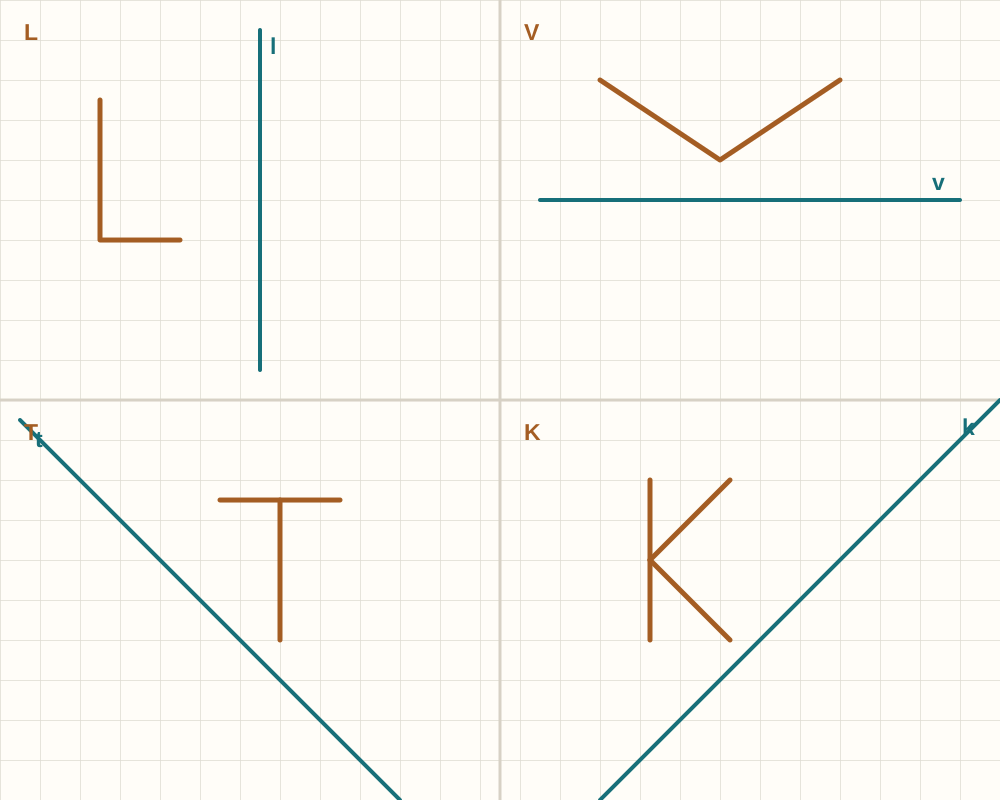
Reflect each letter in its own line: L in l (vertical), V in v (horizontal), T in t (downward-sloping), and K in k (upward-sloping). These are four separate drawings.
Open the solution drawing
For L and V, count squares horizontally and vertically respectively. For T and K, draw a perpendicular from each corner to its sloping mirror line and repeat the distance beyond it. L faces the other way, V turns upside down, and T and K flip in their own lines.
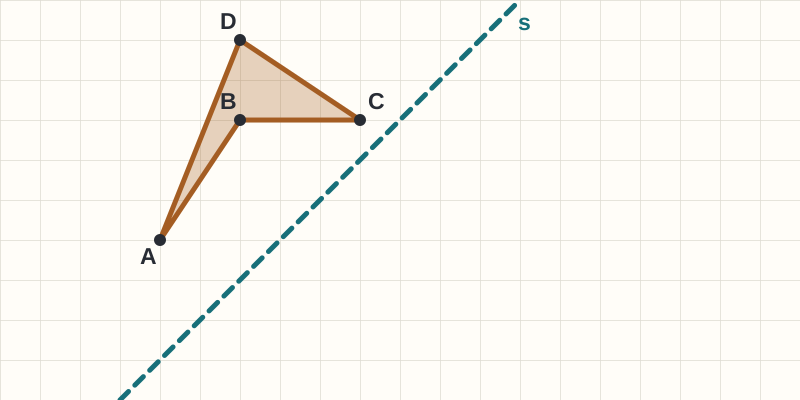
5. A quadrilateral and line s
Draw a quadrilateral ABCD like the example and reflect it in sloping line s.
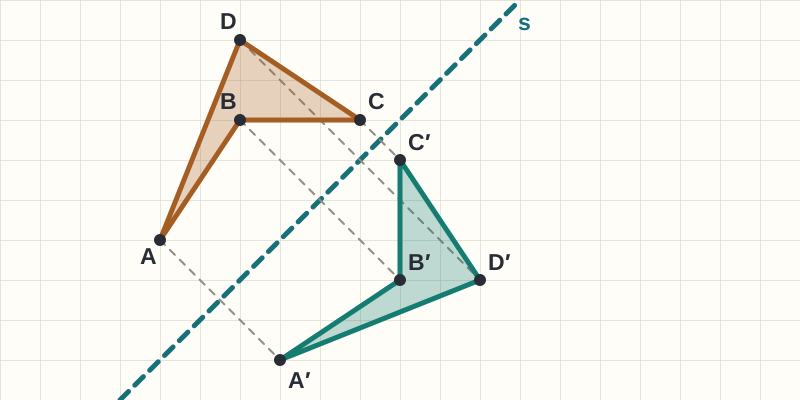
Open the solution drawing
Reflect the four corners separately using perpendiculars to s and equal distances. Join A′, B′, C′ and D′ in that order. The quadrilateral keeps its shape and size but is flipped.
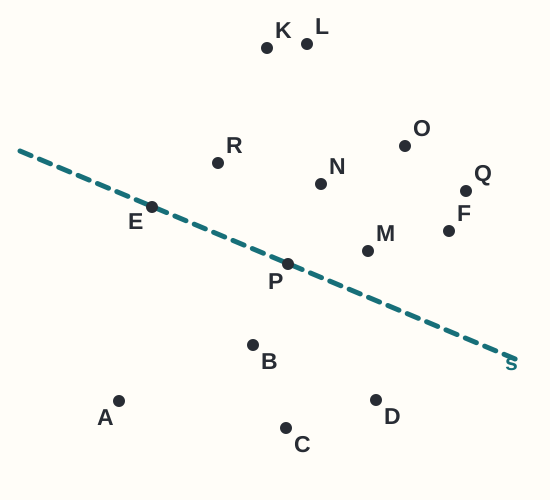
6. Match the reflected points
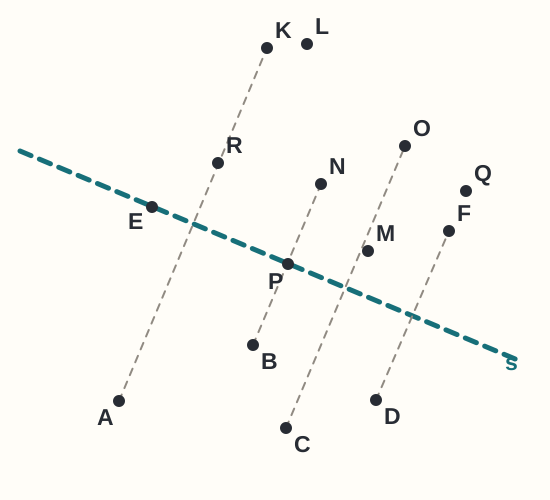
In the diagram with line s, which points are the images of A, B, C, D and E? Pay attention to points that already lie on the line.
Open the solution drawing
The matching pairs are A↔K, B↔N, C↔O and D↔F. E lies on s, so E↔E. P is also on the line and would stay put, but it is not among the requested points. L, R, Q and M are distractors.
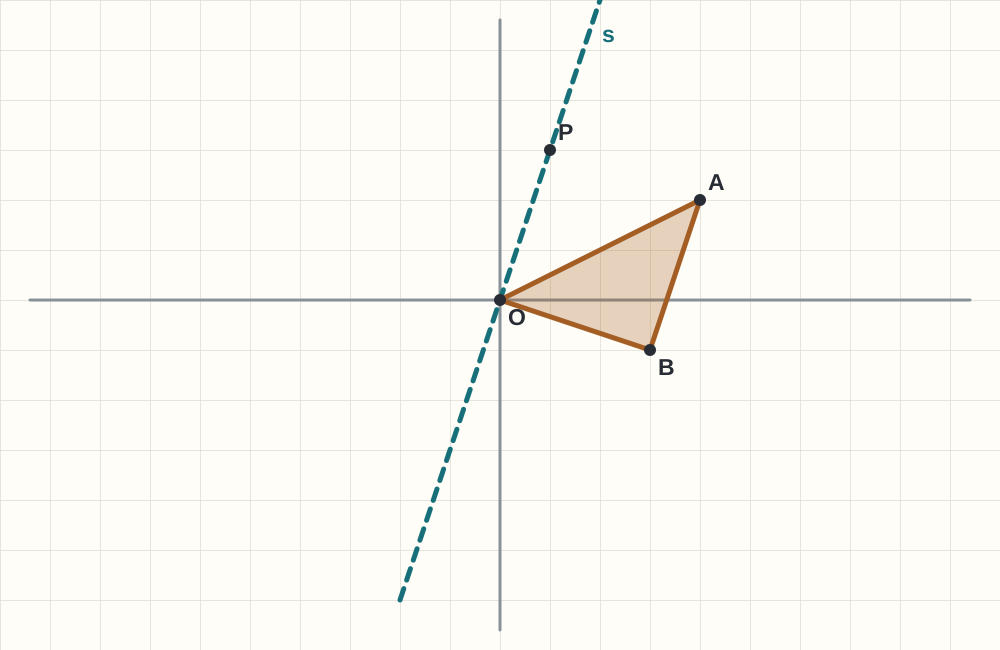
7. The triangle and the line through O and P(1, 3)
On a coordinate grid, draw line s through O=(0, 0) and P(1, 3). Draw triangle OAB with A(4, 2) and B(3, −1), then reflect it in s. What are its new corners?
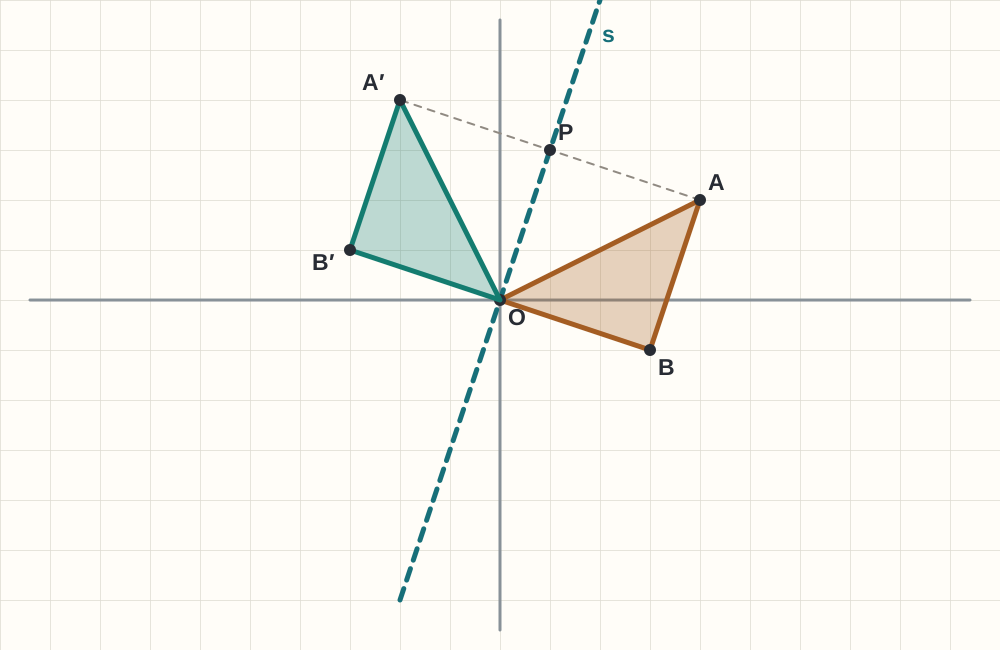
Open the solution drawing
O lies on s and stays put. Drawing perpendiculars to s gives A′=(−2, 4) and B′=(−3, 1). Check: AA′ and BB′ are perpendicular to s, and their midpoints lie on s.
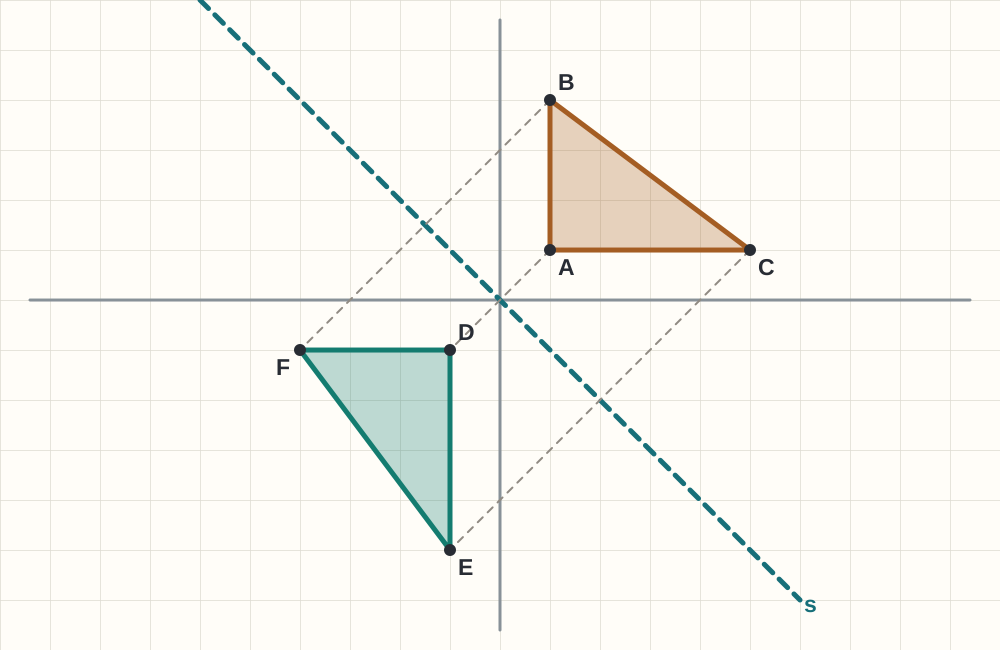
8. Two triangles: find the mirror line
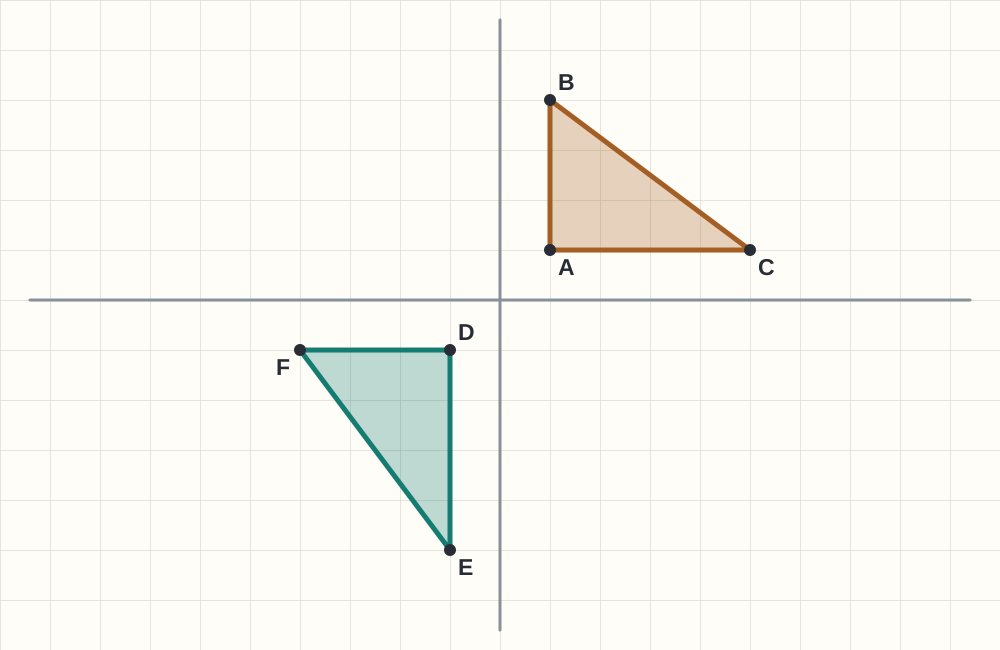
Draw ABC with A(1, 1), B(1, 4), C(5, 1) and DEF with D(−1, −1), E(−1, −5), F(−4, −1). Compare side lengths and find the line in which one triangle reflects into the other.
Open the solution drawing
ABC has side lengths 3, 4 and 5 units; DEF has the same lengths. The matches are A↔D, B↔F and C↔E. The mirror line is y=−x: reflecting (x, y) in it gives (−y, −x).
What to check
A point and its image are on a line perpendicular to the mirror and are equally far from it. Reflected shapes have the same side lengths even though they look flipped. If the mirror passes through a point, that point is its own image.